
The emergence of the first Web version, created in the early 90s by Tim Berners-Lee in Switzerland, its technologies have undergone significant changes until we reach the surface of Web 3.0, this happened especially in terms of user’s interactivity and the massification of the internet usage. In short, the Web’s history presents three major stages:
Web 1.0 – The Static Web
The Web 1.0 presented data and information in a largely static way, being characterised by low users’ interaction with the content. For instance: leaving comments, manipulating, or creating content of a website. Technologies and methods of Web 1.0 are still widely used for displaying static content such as laws and manuals. That generation of the Web was marked by the centralisation of the content production – such as portals, AOL and directories, Yahoo, and Craigslist. Another important aspect is that just few produces information that is consumed for many. Likewise, the broadcasting model widely used in the media industry by TV, radio, newspapers, and magazines. Web 1.0’s greatest virtue was the democratisation of information access.
Web 2.0 – The Interactive Web
Web 2.0 in contrast to Web 1.0 has its content predominantly generated by its users in a process where: many users produce content and many consume. An example of this model is Wikipedia. Other examples of user-generated content platforms are in blogs, social networks and YouTube. In the Web 2.0 users are no longer just content consumers; they become producers or co-producers of contents. In this version of the Web, search engines become more advanced and proliferate, since there is no more room for lists of links in directories, which has given a huge volume of content made by many. Web 2.0’s great virtue is the democratisation of content production.
Web 3.0 – The Actionable Intelligent Web
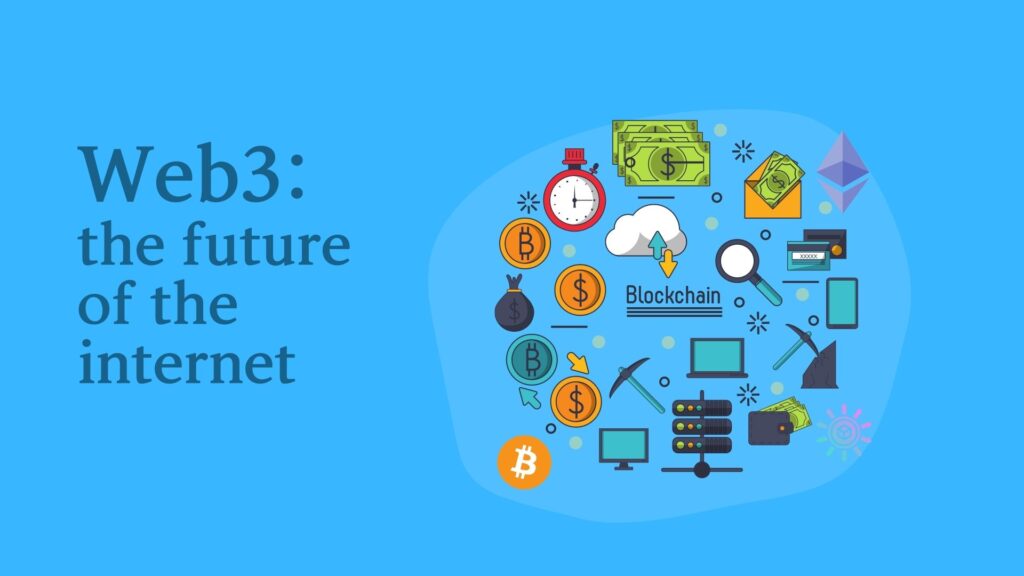
Web 3.0 or Semantic Web combines the virtues of Web 1.0 and 2.0 by adding machine intelligence. In Web 3.0, the machines get along with users in content production and in decision-making, transforming traditional supportive role of the internet infrastructure to a protagonist entity in content/process generation. Furthermore, Web 3.0 services can unite users and computers for problem-solving and intensive knowledge creation tasks. Therefore, with its large processing capacity, Web 3.0 can bring services and products to people and businesses with high added value because of their assertiveness and high customisation. Web 3.0’s great virtue is the democratisation of the capacity of action and knowledge, which was previously only accessible to large businesses and governments.
Web 3.0 example:
We can do a little comparison between Wolfram Alpha (https://www.wolframalpha.com) and Google (https://www.google.com), using both tools, typing the “Brazil vs. Argentina” phrase in both searching engines, and then we see big differences in the results. In the case of Google, the results turn out to be mostly about football games between Brazil and Argentina. Note that the word “football” or “games” were not mentioned in the search. In Wolfram Alpha, the tool considers that the search is a comparison between two countries and consequently brings organised statistics, historical, geographical (maps), demographic, linguistic and other useful aspects for comparison analysis.
Conclusions
We are living in an interesting time in history, where the Web begins to bring more knowledge and action capacity for its users, resulting in considerable changes in several aspects of daily life. This new type of Web 3.0 is moving fast towards a more dynamic and faster changing environment, where the democratisation of the capacity of action and knowledge can speed up business in almost all areas. The areas impacted by Web 3.0 are ranging from: retail to applied molecular medicine; from micro-businesses to large corporations. It is worth for innovative minds, whether businesspeople, politicians, or researchers, to understand this new horizon of possibilities and be prepared for the new generation of businesses.