
DLT, Blockchain, and Hashgraph are all terms related to distributed ledger technology, which is a digital ledger that is distributed across a network of computers. DLT allows for secure and transparent record-keeping of transactions and data without the need for a central authority.
DLT is a broader term that encompasses both blockchain and Hashgraph. DLT refers to any digital ledger that is distributed across a network of computers, allowing for secure and transparent record-keeping of transactions and data. DLT can be used in a variety of applications, including financial services, supply chain management, and healthcare. DLT has the potential to transform many industries by providing a secure and efficient way to store and transfer data.
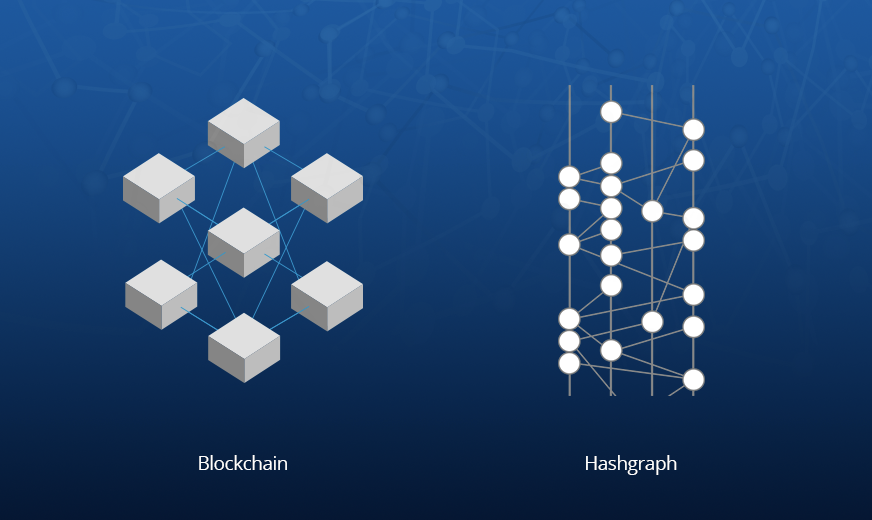
Blockchain is a type of DLT that uses a chain of blocks to record transactions. Each block contains a set of transactions and a unique cryptographic hash that links it to the previous block in the chain. Once a block is added to the chain, it cannot be altered or deleted, ensuring the integrity and immutability of the data stored on the blockchain. Blockchains can be public, meaning anyone can participate and view the data stored on the blockchain, or private, where access is restricted to a specific group of participants. Bitcoin is the most well-known blockchain, but there are many other blockchains in use today, including Ethereum, Binance Smart Chain, and Cardano.
Hashgraph is a newer DLT technology that uses a consensus mechanism called gossip about gossip (Gossip Protocol) to reach consensus on transactions. In Hashgraph, transactions are stored in a directed acyclic graph (DAG) rather than a chain of blocks. In Hashgraph, nodes communicate with each other to share transaction information and reach a consensus on the order of transactions. Each node keeps a copy of the entire DAG, allowing for fast and efficient transaction processing. Hashgraph is known for its high transaction speed, low latency, and low energy consumption. Hashgraph is used in a number of applications, including supply chain management, digital identity, and voting systems.
In conclusion, DLT, Blockchain, and Hashgraph are all related to distributed ledger technology, which is a digital ledger that is distributed across a network of computers. Blockchain is a type of DLT that uses a chain of blocks to record transactions, while Hashgraph uses a DAG and the Gossip Protocol to reach consensus on transactions. Both technologies have their strengths and weaknesses and are used in various applications. DLT is a broader term that encompasses both blockchain and Hashgraph and refers to any digital ledger that is distributed across a network of computers.