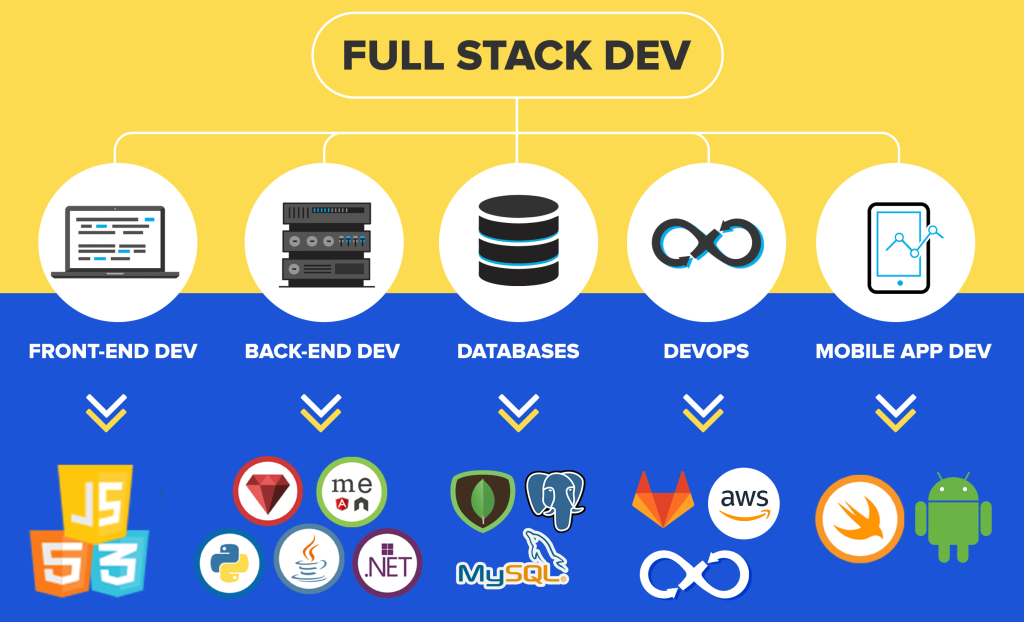

Having Full-stack Developers in each area, including Front-end and Back-end, is crucial for the success of any software development project. Here are some of the reasons why it is important to have Full-stack Developers in each area:
- Seamless Integration: Full-stack Developers can seamlessly integrate front-end and back-end components of web applications. This ensures that the application is developed as a cohesive unit and works seamlessly, reducing the chances of errors and improving overall user experience.
- Faster Time-to-Market: Full-stack Developers can work on the entire stack of a web application, reducing the need for hand-offs between front-end and back-end teams. This results in faster development cycles and quicker time-to-market.
- Reduced Overhead: Having Full-stack Developers in each area reduces the overhead of hiring and managing separate front-end and back-end teams. This can result in significant cost savings for the company.
- Better Understanding of User Experience: Full-stack Developers have a better understanding of user experience and can develop user interfaces that are intuitive and responsive. This results in better user engagement and satisfaction.
- Efficient Bug Fixing: Full-stack Developers can quickly identify and fix bugs as they have a better understanding of the entire technology stack. This reduces the time and effort required for bug fixing, resulting in faster and more efficient software development.
- Improved Collaboration: Full-stack Developers can collaborate more effectively with other team members as they have a better understanding of the entire development process. This improves communication and reduces the chances of misunderstandings or miscommunications.
FULL STACK DevOps Engineers
A Full-stack DevOps Engineer typically requires a combination of software development, IT operations, and automation skills. Here are some of the key skills that a Full-stack DevOps Engineer should have:
- Programming Skills: A Full-stack DevOps Engineer must be proficient in programming languages such as Python, JavaScript, Ruby, Go, or Java. They should also have experience with version control systems such as Git.
- Cloud Computing: Knowledge of cloud computing platforms such as Amazon Web Services (AWS), Microsoft Azure, or Google Cloud Platform is essential for a Full-stack DevOps Engineer. They should also have experience with cloud-native technologies such as Docker and Kubernetes.
- Automation Tools: Automation tools such as Ansible, Chef, and Puppet are crucial for a Full-stack DevOps Engineer to automate software delivery, deployment, and infrastructure management.
- Operating Systems: A Full-stack DevOps Engineer should have a good understanding of Linux and Windows operating systems.
- Monitoring and Logging: Monitoring and logging tools such as Nagios, Prometheus, Grafana, and ELK stack are critical for a Full-stack DevOps Engineer to monitor and troubleshoot the infrastructure and applications.
- Networking: Networking knowledge is essential for a Full-stack DevOps Engineer to configure and maintain network infrastructure.
- Database Management: A Full-stack DevOps Engineer should have knowledge of database management systems such as MySQL, PostgreSQL, or MongoDB.
- Security: A Full-stack DevOps Engineer should have a strong understanding of security principles and experience implementing security best practices.
- Soft skills: The Full-stack DevOps Engineer should have excellent communication skills to work with other teams and ability to work in fast-paced environments.
- Problem-solving skills: A Full-stack DevOps Engineer should be a problem-solver, able to identify problems and provide quick solutions.
- Agile methodologies: A Full-stack DevOps Engineer should have experience working with Agile methodologies and collaboration tools such as Jira, Trello, or Asana.
- Continuous Integration and Continuous Deployment (CI/CD): A Full-stack DevOps Engineer should have experience in implementing CI/CD pipelines using tools like Jenkins, CircleCI, or TravisCI.
- Cloud infrastructure management: Understanding and experience in using cloud infrastructure management tools such as Terraform, CloudFormation, or Azure Resource Manager to manage cloud resources.
- Containerization: Experience with containerization tools like Docker and container orchestration tools like Kubernetes is essential for Full-stack DevOps Engineer.
These are just some of the essential skills that a Full-stack DevOps Engineer should possess. However, the actual skill set required may vary based on the specific job description and company requirements.
FULL STACK TECHNICAL SUPPORT ENGINEERS
A Full-stack Technical Support Engineer is responsible for providing technical support to end-users and resolving technical issues. Here are some of the key skills that a Full-stack Technical Support Engineer should have:
- Technical Knowledge: A Full-stack Technical Support Engineer must have a strong understanding of technical concepts related to software development, hardware, operating systems, networking, and databases.
- Troubleshooting Skills: A Full-stack Technical Support Engineer should have strong troubleshooting skills to identify and resolve technical issues. They should be able to analyze logs and diagnose problems with software and hardware.
- Communication Skills: Excellent communication skills are essential for a Full-stack Technical Support Engineer to communicate with end-users and other teams within the organization. They should be able to explain technical concepts in a simple and understandable language.
- Customer Service Skills: A Full-stack Technical Support Engineer should have strong customer service skills to provide a positive experience to end-users. They should be patient, empathetic, and able to handle difficult situations.
- Scripting and Automation: Knowledge of scripting languages such as Python, Bash, or PowerShell is beneficial for a Full-stack Technical Support Engineer to automate repetitive tasks and troubleshoot issues.
- Operating Systems: A Full-stack Technical Support Engineer should have a good understanding of various operating systems such as Windows, Linux, and macOS.
- Networking: Networking knowledge is essential for a Full-stack Technical Support Engineer to troubleshoot network-related issues.
- Databases: A Full-stack Technical Support Engineer should have knowledge of database management systems such as MySQL, PostgreSQL, or MongoDB.
- Agile methodologies: A Full-stack Technical Support Engineer should have experience working with Agile methodologies and collaboration tools such as Jira, Trello, or Asana.
- Time Management Skills: A Full-stack Technical Support Engineer should be able to manage their time effectively to handle multiple technical issues simultaneously.
- Soft skills: The Full-stack Technical Support Engineer should have good listening skills, a positive attitude, and the ability to work under pressure.
- Continuous Learning: A Full-stack Technical Support Engineer should have a passion for continuous learning and stay updated with the latest technologies and trends.
These are just some of the essential skills that a Full-stack Technical Support Engineer should possess. However, the actual skill set required may vary based on the specific job description and company requirements.
FULL STACK JAVA DEVELOPERS
A Full-stack Java Developer typically requires a combination of programming skills, web development skills, and database skills. Here are some of the key skills that a Full-stack Java Developer should have:
- Java Programming: A Full-stack Java Developer should be proficient in Java programming and have knowledge of Java frameworks such as Spring and Hibernate.
- Front-end Development: Knowledge of front-end technologies such as HTML, CSS, and JavaScript is essential for a Full-stack Java Developer to develop user interfaces.
- JavaScript Frameworks: Experience with popular JavaScript frameworks such as React, Angular, or Vue.js is beneficial for a Full-stack Java Developer to develop interactive and responsive web applications.
- Web Services: Knowledge of web services such as REST and SOAP is essential for a Full-stack Java Developer to develop scalable and distributed applications.
- Database Management: A Full-stack Java Developer should have knowledge of database management systems such as MySQL, Oracle, or PostgreSQL.
- ORM Tools: Knowledge of Object Relational Mapping (ORM) tools such as Hibernate or MyBatis is beneficial for a Full-stack Java Developer to map Java objects to relational databases.
- Spring Framework: Knowledge of Spring Framework is essential for a Full-stack Java Developer to develop scalable and modular applications.
- Agile Methodologies: A Full-stack Java Developer should have experience working with Agile methodologies and collaboration tools such as Jira, Trello, or Asana.
- Test-Driven Development: Experience with test-driven development (TDD) practices and tools such as JUnit, Mockito, or TestNG is beneficial for a Full-stack Java Developer to write high-quality and maintainable code.
- Cloud Computing: Knowledge of cloud computing platforms such as Amazon Web Services (AWS), Microsoft Azure, or Google Cloud Platform is beneficial for a Full-stack Java Developer to deploy and manage applications in the cloud.
- DevOps: Knowledge of DevOps practices and tools such as Jenkins, Docker, and Kubernetes is beneficial for a Full-stack Java Developer to automate software delivery and deployment.
- Soft Skills: Good communication skills, problem-solving skills, and the ability to work in a team are essential for a Full-stack Java Developer to work effectively with other team members and stakeholders.
These are just some of the essential skills that a Full-stack Java Developer should possess. However, the actual skill set required may vary based on the specific job description and company requirements.
FULL STACK BLOCKCHAIN DEVELOPERS
A Full-stack Blockchain Developer is responsible for designing, developing, and deploying blockchain-based applications. Here are some of the key skills that a Full-stack Blockchain Developer should have:
- Blockchain Technology: A Full-stack Blockchain Developer should have a strong understanding of blockchain technology and its various components such as distributed ledger, smart contracts, consensus algorithms, and cryptography.
- Blockchain Frameworks: Knowledge of blockchain frameworks such as Ethereum, Hyperledger Fabric, or Corda is essential for a Full-stack Blockchain Developer to develop decentralized applications (dApps).
- Smart Contract Development: A Full-stack Blockchain Developer should have experience in writing and deploying smart contracts using programming languages such as Solidity or Vyper.
- Front-end Development: Knowledge of front-end technologies such as HTML, CSS, and JavaScript is essential for a Full-stack Blockchain Developer to develop user interfaces for dApps.
- js: Experience with Web3.js, a JavaScript library used to interact with Ethereum nodes, is beneficial for a Full-stack Blockchain Developer to build dApps on the Ethereum blockchain.
- Database Management: A Full-stack Blockchain Developer should have knowledge of database management systems such as MySQL or MongoDB, as blockchain applications often require database integration.
- DevOps: Knowledge of DevOps practices and tools such as Docker, Kubernetes, and Git is beneficial for a Full-stack Blockchain Developer to automate software delivery and deployment.
- Cryptography: A Full-stack Blockchain Developer should have knowledge of cryptography concepts such as public-key cryptography, digital signatures, and hash functions.
- Security: A Full-stack Blockchain Developer should have knowledge of blockchain security concepts such as private keys, smart contract vulnerabilities, and distributed denial-of-service (DDoS) attacks.
- Agile Methodologies: A Full-stack Blockchain Developer should have experience working with Agile methodologies and collaboration tools such as Jira, Trello, or Asana.
- Soft Skills: Good communication skills, problem-solving skills, and the ability to work in a team are essential for a Full-stack Blockchain Developer to work effectively with other team members and stakeholders.
These are just some of the essential skills that a Full-stack Blockchain Developer should possess. However, the actual skill set required may vary based on the specific job description and company requirements.
FULL STACK UI DEVELOPERS
A Full-stack UI Developer is responsible for developing user interfaces for web applications. Here are some of the key skills that a Full-stack UI Developer should have:
- Front-end Development: Knowledge of front-end technologies such as HTML, CSS, and JavaScript is essential for a Full-stack UI Developer to develop user interfaces.
- JavaScript Frameworks: Experience with popular JavaScript frameworks such as React, Angular, or Vue.js is beneficial for a Full-stack UI Developer to develop interactive and responsive web applications.
- UI/UX Design: A Full-stack UI Developer should have a good understanding of user interface (UI) and user experience (UX) design principles.
- Responsive Design: A Full-stack UI Developer should have experience in developing responsive web applications that work well on different devices such as desktops, tablets, and smartphones.
- Web Standards: Knowledge of web standards such as HTML5, CSS3, and JavaScript ES6 is essential for a Full-stack UI Developer to ensure cross-browser compatibility and accessibility.
- Web Services: Knowledge of web services such as REST and SOAP is beneficial for a Full-stack UI Developer to develop scalable and distributed applications.
- Server-side Development: Knowledge of server-side technologies such as Node.js, Python, or Ruby on Rails is beneficial for a Full-stack UI Developer to develop server-side components of web applications.
- Database Management: A Full-stack UI Developer should have knowledge of database management systems such as MySQL, Oracle, or PostgreSQL.
- Agile Methodologies: A Full-stack UI Developer should have experience working with Agile methodologies and collaboration tools such as Jira, Trello, or Asana.
- Test-Driven Development: Experience with test-driven development (TDD) practices and tools such as Jest, Mocha, or Jasmine is beneficial for a Full-stack UI Developer to write high-quality and maintainable code.
- DevOps: Knowledge of DevOps practices and tools such as Jenkins, Docker, and Kubernetes is beneficial for a Full-stack UI Developer to automate software delivery and deployment.
- Soft Skills: Good communication skills, problem-solving skills, and the ability to work in a team are essential for a Full-stack UI Developer to work effectively with other team members and stakeholders.
These are just some of the essential skills that a Full-stack UI Developer should possess. However, the actual skill set required may vary based on the specific job description and company requirements.
FULL-STACK TESTER
A Full-stack Tester is responsible for testing web applications at all layers of the technology stack, including front-end, back-end, and database. Here are some of the key skills that a Full-stack Tester should have:
- Testing: A Full-stack Tester should have experience in software testing, including functional testing, regression testing, integration testing, and performance testing.
- Automation: Knowledge of test automation tools and frameworks such as Selenium, Appium, or Cypress is essential for a Full-stack Tester to automate repetitive testing tasks and ensure faster and more accurate results.
- Programming: Knowledge of programming languages such as Java, Python, or JavaScript is essential for a Full-stack Tester to develop automated test scripts and perform test data analysis.
- Test Management: Experience with test management tools such as TestRail, Zephyr, or Xray is beneficial for a Full-stack Tester to manage test cases, test runs, and test results.
- Agile Methodologies: A Full-stack Tester should have experience working with Agile methodologies and collaboration tools such as Jira, Trello, or Asana.
- DevOps: Knowledge of DevOps practices and tools such as Jenkins, Docker, and Kubernetes is beneficial for a Full-stack Tester to automate software delivery and deployment.
- Web Technologies: Knowledge of web technologies such as HTML, CSS, and JavaScript is essential for a Full-stack Tester to understand the behavior and functionality of web applications.
- API Testing: Experience with API testing tools such as Postman, SoapUI, or Swagger is beneficial for a Full-stack Tester to test web services and RESTful APIs.
- Database Management: A Full-stack Tester should have knowledge of database management systems such as MySQL, Oracle, or PostgreSQL to perform database testing and validate data integrity.
- Security Testing: A Full-stack Tester should have knowledge of security testing concepts such as OWASP Top 10 vulnerabilities, authentication, and authorization.
- Soft Skills: Good communication skills, problem-solving skills, and the ability to work in a team are essential for a Full-stack Tester to work effectively with other team members and stakeholders.
These are just some of the essential skills that a Full-stack Tester should possess. However, the actual skill set required may vary based on the specific job description and company requirements.
FULL-STACK MOBILE APP DEVELOPER
A Full-stack Mobile App Developer is responsible for developing both the front-end and back-end of mobile applications. Here are some of the key skills that a Full-stack Mobile App Developer should have:
- Mobile App Development: A Full-stack Mobile App Developer should have experience in mobile app development, including both iOS and Android platforms.
- Cross-Platform Development: Knowledge of cross-platform mobile app development frameworks such as React Native, Xamarin, or Flutter is essential for a Full-stack Mobile App Developer to develop mobile applications that work seamlessly on multiple platforms.
- Programming Languages: Knowledge of programming languages such as Java, Swift, Kotlin, or Objective-C is essential for a Full-stack Mobile App Developer to develop native mobile applications for iOS and Android platforms.
- Front-end Development: A Full-stack Mobile App Developer should have experience in front-end development using web technologies such as HTML, CSS, and JavaScript.
- Back-end Development: Knowledge of back-end development technologies such as Node.js, PHP, or Ruby on Rails is essential for a Full-stack Mobile App Developer to develop APIs and connect mobile applications to servers and databases.
- Mobile App UI/UX Design: A Full-stack Mobile App Developer should have experience in mobile app UI/UX design to ensure that the mobile application is user-friendly and visually appealing.
- API Development: Knowledge of API development and integration is essential for a Full-stack Mobile App Developer to develop secure and scalable mobile applications that can communicate with servers and databases.
- Database Management: A Full-stack Mobile App Developer should have knowledge of database management systems such as MySQL, Oracle, or PostgreSQL to perform database testing and validate data integrity.
- DevOps: Knowledge of DevOps practices and tools such as Jenkins, Docker, and Kubernetes is beneficial for a Full-stack Mobile App Developer to automate software delivery and deployment.
- Soft Skills: Good communication skills, problem-solving skills, and the ability to work in a team are essential for a Full-stack Mobile App Developer to work effectively with other team members and stakeholders.
These are just some of the essential skills that a Full-stack Mobile App Developer should possess. However, the actual skill set required may vary based on the specific job description and company requirements.
Full Stack Data Engineer:
- Proficiency in programming languages like Python, Java, Scala, or C++
- Strong knowledge of database systems such as SQL, NoSQL, and Hadoop
- Familiarity with distributed computing systems like Apache Spark or Apache Flink
- Knowledge of data warehousing and ETL (Extract, Transform, Load) processes
- Familiarity with cloud computing platforms like AWS, GCP, or Azure
- Experience with data modeling and schema design
- Knowledge of data security and privacy protocols
- Familiarity with DevOps practices and tools such as Git, Jenkins, and Docker
- Strong problem-solving and analytical skills
- Excellent communication and collaboration skills
Data Analyst:
- Proficiency in SQL and other query languages
- Experience with data visualization tools such as Tableau, Power BI, or D3.js
- Knowledge of statistical analysis and data mining techniques
- Strong problem-solving and analytical skills
- Familiarity with data modeling and schema design
- Good understanding of business processes and KPIs
- Excellent communication and collaboration skills
Data Scientist:
- Strong proficiency in programming languages such as Python or R
- Knowledge of statistical modeling and machine learning algorithms
- Familiarity with data mining and data wrangling techniques
- Experience with data visualization tools such as Tableau, Power BI, or D3.js
- Strong problem-solving and analytical skills
- Good understanding of business processes and KPIs
- Familiarity with cloud computing platforms like AWS, GCP, or Azure
- Excellent communication and collaboration skills
In summary, having Full-stack Developers in each area, including Front-end and Back-end, is crucial for developing high-quality, efficient, and user-friendly web applications. It allows for seamless integration, faster time-to-market, cost savings, better user experience, efficient bug fixing, and improved collaboration.